

Business leaders love talking about innovation. However, when it comes to actually building it, many organizations still struggle. Brainstorms go nowhere. Strategies look great on slides but fall apart in execution. Teams stay busy, yet results remain flat.
This is exactly where design thinking workshops step in and quietly change the game.
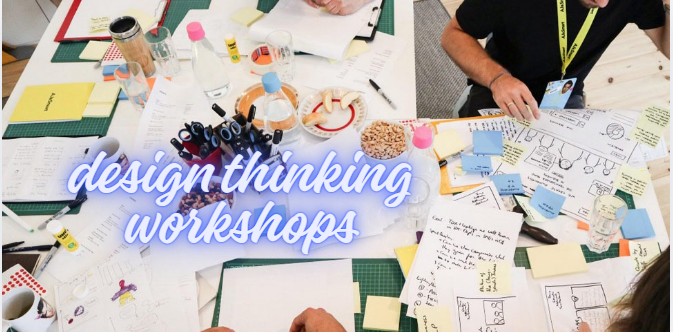
They are not trendy creativity sessions or colorful sticky-note exercises. When done right, they become powerful engines for problem-solving, customer insight, and sustainable business growth. I’ve seen companies shift entire product roadmaps, fix broken services, and unlock new revenue streams simply by changing how they think and collaborate.
Let’s break down how design thinking workshops drive real business impact, why they work so well, and how organizations can use them to move from ideas to action.
Understanding Design Thinking Beyond the Buzzword
Design thinking is often misunderstood. Many people associate it only with designers or assume it’s about aesthetics. In reality, it’s a human-centered innovation framework focused on solving complex business problems.
At its core, design thinking helps teams:
- Understand real user needs
- Challenge assumptions
- Explore creative solutions
- Test ideas quickly before scaling
Design thinking workshops bring this mindset into a structured, collaborative environment where cross-functional teams can work together with clarity and purpose.
people also read this : Why the Blazertje Is a Wardrobe Essential in 2026
The Five Core Stages of Design Thinking
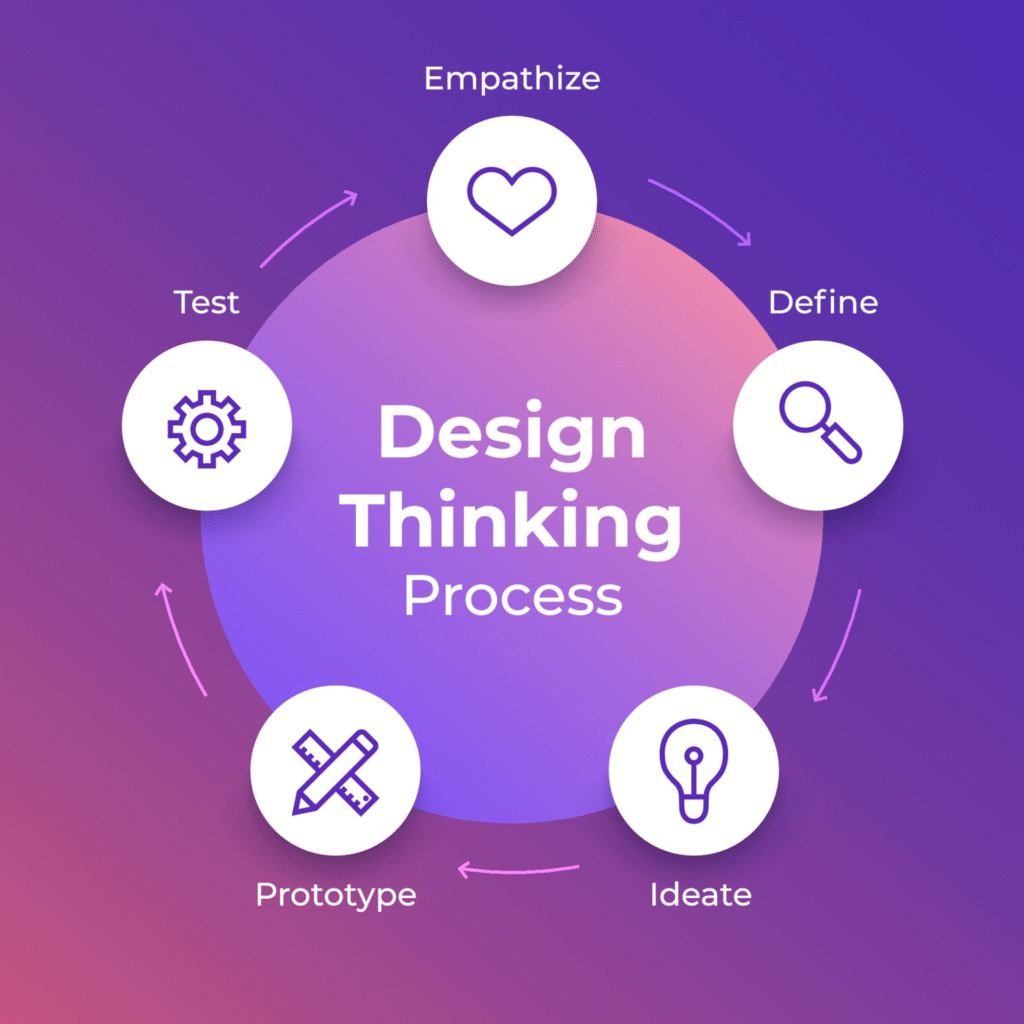
Most design thinking workshops are built around five flexible stages:
- Empathize – Deeply understand customer pain points and behaviors
- Define – Clearly articulate the core problem worth solving
- Ideate – Generate diverse ideas without judgment
- Prototype – Create low-cost, fast representations of solutions
- Test – Validate ideas through feedback and iteration
These stages are not linear. Teams often move back and forth, which allows learning to happen fast and naturally.
Why Traditional Problem-Solving Often Falls Short
Before exploring the impact of design thinking workshops, it helps to understand why many organizations fail to innovate consistently.
Common challenges include:
- Siloed teams with limited collaboration
- Decisions driven by assumptions instead of data
- Overreliance on past success models
- Fear of failure or experimentation
- Slow feedback loops from customers
Design thinking directly addresses these barriers by creating a shared process, shared language, and shared ownership of outcomes.
How Design Thinking Workshops Create Tangible Business Value
The real power of design thinking workshops lies in their ability to connect creativity with measurable results. Let’s explore how that happens.
1. They Align Teams Around Real Customer Needs
One of the biggest business risks is building solutions nobody actually wants. Design thinking workshops begin with empathy, forcing teams to step out of internal assumptions and into the customer’s world.
During workshops, teams use:
- User interviews
- Customer journey mapping
- Persona development
- Empathy maps
This process helps businesses uncover unmet needs, emotional triggers, and friction points that traditional market research often misses.
As a result, decisions become customer-driven rather than opinion-driven.
2. They Improve Cross-Functional Collaboration
Innovation rarely happens in isolation. However, many organizations still operate in silos. Design thinking workshops intentionally bring together people from marketing, product, sales, operations, and leadership.
This cross-functional approach:
- Encourages diverse perspectives
- Reduces internal friction
- Speeds up decision-making
- Builds shared accountability
When people co-create solutions, buy-in happens naturally. That alone can save months of internal alignment later.
3. They Turn Ambiguous Problems Into Clear Opportunities
Many business challenges feel vague:
- “Our growth has slowed”
- “Customers are disengaged”
- “Our product isn’t differentiated enough”
Design thinking workshops help teams reframe these vague issues into clear problem statements.
For example:
Instead of “Customers don’t like our app,” teams may define:
“Busy professionals struggle to complete key tasks on our app in under two minutes.”
This clarity changes everything. Solutions become focused, testable, and actionable.
4. They Accelerate Innovation Without Increasing Risk
Traditional innovation models often require heavy investment upfront. Design thinking flips that logic.
Through rapid prototyping and testing, workshops allow teams to:
- Experiment cheaply
- Fail safely
- Learn quickly
- Iterate confidently
Low-fidelity prototypes, sketches, wireframes, and role-playing exercises provide feedback early, before major resources are committed.
This reduces risk while increasing innovation speed.
5. They Drive Better Product and Service Design
Design thinking workshops are especially powerful for product development and service design.
Businesses use them to:
- Improve user experience
- Redesign customer journeys
- Launch new digital products
- Optimize onboarding processes
- Enhance service delivery models
Because solutions are built with real users in mind, they tend to perform better in the market.
Real Business Outcomes Enabled by Design Thinking Workshops
Let’s move from theory to results. Organizations that consistently run design thinking workshops often report improvements across key performance areas.
Strategic Impact
- Clearer innovation roadmaps
- Stronger value propositions
- Better alignment between vision and execution
Operational Impact
- Faster time-to-market
- Reduced rework and wasted effort
- More agile decision-making
Financial Impact
- Increased customer retention
- Higher conversion rates
- New revenue streams
- Improved return on investment
Cultural Impact
- Stronger innovation culture
- Higher employee engagement
- Increased psychological safety
- More openness to experimentation
These outcomes are not accidental. They come from changing how people think, collaborate, and solve problems.
Key Elements of High-Impact Design Thinking Workshops
Not all workshops deliver the same results. The most effective ones share a few critical elements.
Clear Business Objectives
Successful design thinking workshops are anchored to real business challenges, not abstract creativity exercises.
Examples include:
- Improving customer onboarding
- Reducing churn
- Exploring new market opportunities
- Reimagining internal processes
Clarity upfront ensures relevance and focus.
Skilled Facilitation
A strong facilitator keeps energy high while guiding teams through structured activities. They know when to push thinking and when to slow down for reflection.
Good facilitation:
- Encourages equal participation
- Manages group dynamics
- Prevents dominant voices from taking over
- Keeps discussions outcome-focused
Diverse Participants
Diversity fuels creativity. The best design thinking workshops include participants from different departments, experience levels, and perspectives.
This diversity leads to richer insights and more innovative ideas.
Hands-On Activities
Design thinking is not theoretical. Workshops rely on doing, building, and testing.
Common activities include:
- Brainstorming sessions
- Sketching exercises
- Storyboarding
- Role-playing scenarios
- Prototype testing
Action leads to insight, not endless discussion.
Measuring the ROI of Design Thinking Workshops
One common question leaders ask is how to measure impact. While creativity can feel intangible, results don’t have to be.
Organizations track:
- Adoption rates of new solutions
- Customer satisfaction scores
- Net promoter score improvements
- Revenue growth from new offerings
- Speed of implementation
Over time, design thinking workshops often prove to be one of the highest-leverage investments a business can make.
When Businesses Should Use Design Thinking Workshops
Design thinking workshops are especially valuable when:
- Facing complex or ambiguous challenges
- Entering new markets
- Launching new products or services
- Redesigning customer experiences
- Experiencing stagnation or declining growth
They are not limited to startups or tech companies. Enterprises, nonprofits, healthcare organizations, and even government agencies use them successfully.
Common Myths About Design Thinking Workshops
Despite their success, misconceptions still exist.
“They’re Only for Creative Teams”
False. Design thinking is for anyone solving problems, including finance, operations, and strategy teams.
“They’re Too Soft or Abstract”
When structured properly, workshops produce concrete outcomes, prototypes, and action plans.
“They Take Too Much Time”
In reality, they often save time by preventing costly misalignment and rework later.
Embedding Design Thinking Beyond the Workshop
The biggest impact comes when businesses move beyond one-off sessions and embed design thinking into daily operations.
This includes:
- Training internal facilitators
- Using design thinking tools in meetings
- Encouraging experimentation
- Rewarding learning, not just outcomes
Over time, design thinking becomes part of how decisions are made, not just a workshop format.
The Future of Design Thinking in Business
As markets become more competitive and customer expectations rise, businesses need more than efficiency. They need empathy, creativity, and adaptability.
Design thinking workshops provide a practical way to build those capabilities at scale. They help organizations stay relevant, resilient, and responsive in a rapidly changing world.
Conclusion:
At their best, design thinking workshops are not about sticky notes or creative exercises. They are about changing how businesses think, listen, and act.
They help teams:
- Focus on real customer needs
- Collaborate across boundaries
- Reduce risk while innovating
- Turn ideas into measurable results